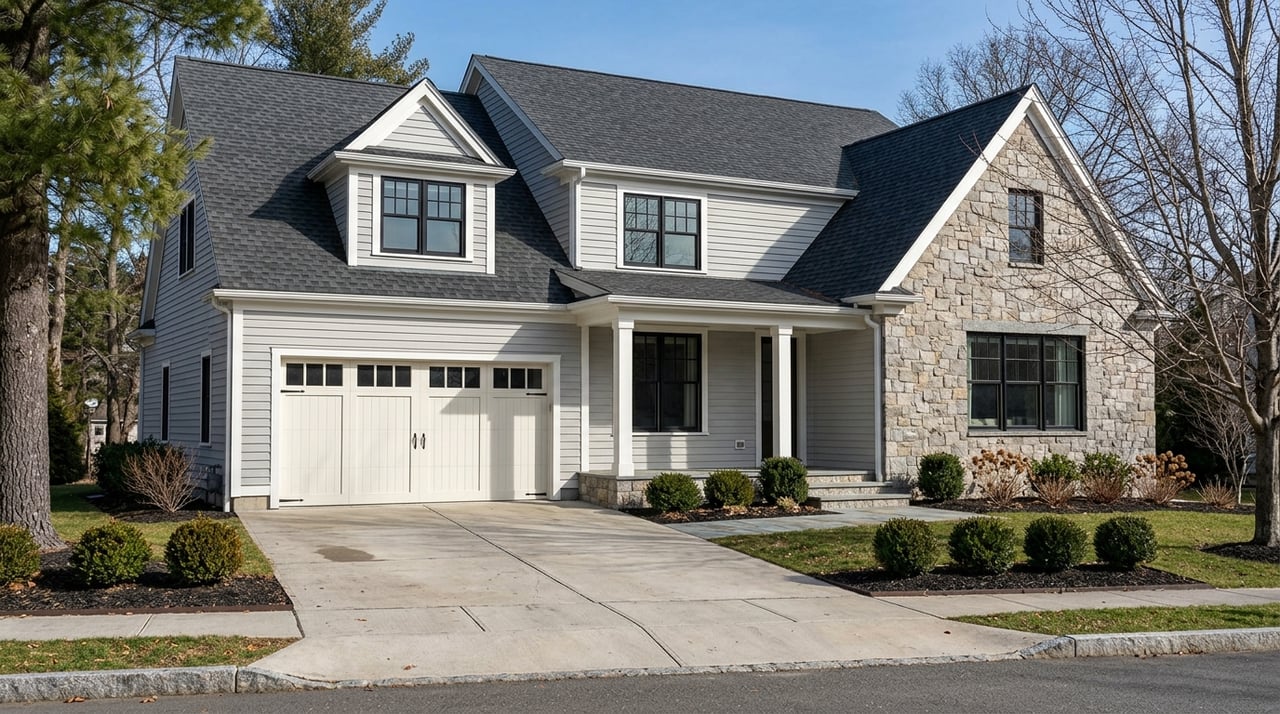
Trying to choose your first Wellesley neighborhood can feel overwhelming fast. The town is highly sought after, prices vary by area, and neighborhood names do not always work like official boundary lines on a map. If you want a practical way to narrow your search, this guide will help you compare Wellesley’s key areas by commute, housing style, daily convenience, and price range so you can build a smart shortlist. Let’s dive in.
Start With How Wellesley Works
One of the first things to know is that Wellesley is often described through village centers, commuter rail access, subdivision names, and elementary school areas instead of strict official neighborhoods. In practice, buyers often hear names like Wellesley Hills, Wellesley Farms, Poets Corner, Cliff Estates, Dana Hall, The Fells, Lower Falls, and Linden Street.
That matters because your search may go more smoothly if you think in terms of lifestyle and location patterns, not just neighborhood labels. For many first-time buyers, the best first step is to decide whether you care most about rail access, walkability, lot size, housing type, or entry price.
Focus on Your Top Priority First
If you try to solve for everything at once, Wellesley can feel hard to decode. A clearer approach is to rank your priorities before you tour homes.
Ask yourself a few simple questions:
- Do you want the easiest possible commuter rail access?
- Do you want to be near shops and daily errands?
- Do you prefer a condo or a single-family home?
- Are you hoping for a lower entry point within Wellesley?
- Do you want a larger lot or an older home with more space around it?
- Are you considering updates or exterior changes to an older property?
Once you know your top two or three priorities, certain areas rise to the top much faster.
Best Areas for Transit and Walkability
For many first-time buyers, commute convenience shapes everything else. Wellesley has three MBTA Framingham/Worcester Line stations: Wellesley Square, Wellesley Hills, and Wellesley Farms.
The town notes that residents can walk, bike, use Catch Connect, or drive and park at these stations for trips toward Boston and Worcester. Wellesley also provides commuter parking and discounted annual passes for all-day lots, which adds flexibility if you do not live within an easy walk of the platform.
Wellesley Square
If you want the clearest in-town option, Wellesley Square stands out. It is the town’s main commercial and civic center and is the strongest fit for buyers who want to be close to shops, services, and a more walkable daily routine.
It can also offer condo opportunities that may appeal to first-time buyers who want less exterior maintenance. Current market data in the research report shows a median sale price of about $1.4 million over the last three months, with examples that include two-bedroom condo living.
Wellesley Hills
Wellesley Hills is another strong choice if transit access matters. The area is anchored by the Clock Tower at Elm Park and includes a village-style setting with its own business district.
From a housing perspective, Wellesley Hills covers a broad range. Active listing examples in the research report span from around $1.35 million for a renovated Colonial to nearly $5.9 million for a luxury renovation, which means buyers can find very different price tiers and home styles in the same broader area.
Wellesley Farms
Wellesley Farms also offers strong station access, but the housing profile is often more expensive. It is one of Wellesley’s most historically distinguished residential areas, and the neighborhood’s character reflects that history.
Recent market data in the research report shows a median sale price around $2.18 million, with recent sales ranging from about $1.35 million to $4.75 million. If you like commuter convenience but want a more residential setting with larger homes, this may be worth a closer look.
Best Areas for Larger Lots and Single-Family Homes
If your main goal is space, lot size, or a more traditional single-family setting, your shortlist may look different. In Wellesley, Dana Hall, Cliff Estates, and Wellesley Farms are especially useful areas to compare.
Dana Hall
Dana Hall is described in town records as a primarily single-family neighborhood. It is roughly bounded by Grove Street, Benvenue Street, Cartwright Road, and Needham, with development dating back to the late 1920s.
The area includes a range of lot sizes and home values. Current market data in the research report places the median sale price around $1.4 million, with recent sales from about $1.05 million to $3.73 million, making it a neighborhood worth watching if you want a single-family search with a broader price spread.
Cliff Estates
Cliff Estates is an estate-scale pocket within Wellesley Hills. It is known for larger homes, wooded surroundings, and a more luxury-oriented profile.
The research report shows a median sale price around $3.68 million, with recent sales from about $1.86 million to $4.75 million and active luxury listings above $5 million. For a first-time buyer, this is usually a better fit if your budget is already in the upper tier and you want a more substantial property setting.
Wellesley Farms Revisited
Wellesley Farms belongs in this conversation too because it combines strong commuter access with established residential character. If you are torn between convenience and a more classic single-family setting, it may offer a useful middle ground.
That said, the pricing still places it firmly in the higher end of the Wellesley market. It often makes sense for buyers who are prioritizing long-term home style and setting over finding the lowest entry point.
Areas That May Offer More Mixed Entry Points
In a town where overall pricing remains high, many first-time buyers want to know where to look for relatively more accessible inventory. Wellesley’s draft Strategic Housing Plan reports a 2024 median single-family sale price of $2,103,500 and a median condominium sale price of $1,787,500, which shows just how competitive the town can be.
A separate current market source in the research report puts the townwide median sale price around $1.825 million in March 2026, reflecting a different rolling window and property mix. The exact number may shift by data source, but the larger point is consistent: Wellesley is an expensive market, so relative value matters.
The Fells
The Fells is one area where the housing mix may create a lower entry point than some of Wellesley’s better-known luxury pockets. The research report describes it as more mixed, with a median around $1.15 million and recent sales including both smaller condos and detached homes.
For buyers who want to get into Wellesley without targeting the highest-priced sections first, this can be an area to watch closely. Inventory type matters here, so it helps to stay flexible on property style.
Some Wellesley Square and Dana Hall Inventory
Wellesley Square and Dana Hall can also produce opportunities depending on what comes to market. Some condo inventory in Wellesley Square and some condo inventory in Dana Hall may offer alternatives to a higher-priced single-family search.
This is where a focused, early-stage search can help. Rather than assuming one area is always out of reach, it makes sense to track actual listing patterns over time.
Think Beyond the House Itself
Your first neighborhood choice is not only about the home. It is also about how the area supports your daily routine once you move in.
Wellesley has a wide range of parks and open space. The town maintains 642 acres of passive recreation areas, 255 acres of active recreation areas, 18 parks, 14 conservation areas, and 5.6 miles of the Cochituate Aqueduct Trail.
Fuller Brook Park runs for more than 3 miles through central Wellesley and is described by the town as a pedestrian alternative away from heavier Washington Street traffic. Morses Pond offers swimming, boating, and fishing, while Rockridge Pond provides a wooded trail setting in Cliff Estates.
If outdoor access matters to you, it is worth looking at how often you would realistically use these amenities. A neighborhood that works well on paper may feel even better if it fits the way you like to spend your free time.
Check Practical Details Before You Commit
First-time buyers are often surprised by the local details that can shape a decision after they have already fallen for a home. In Wellesley, two issues are especially worth checking early.
School Assignment Areas
Wellesley Public Schools lists six elementary schools, and district materials describe a neighborhood-school philosophy. For buyers comparing homes in different parts of town, school assignment can be a meaningful piece of the neighborhood decision.
Rules for Older Homes and Exterior Changes
If you are looking at an older property and thinking about future updates, do your homework before you buy. The town has a demolition review bylaw, one active Neighborhood Conservation District, and another proposed district that may affect exterior change plans in certain areas.
That does not mean you should avoid older homes. It simply means you should factor in the approval process and any design-related limits before making assumptions about renovations.
A Simple Way to Build Your Shortlist
If you want a quick Wellesley shorthand, start here:
- Transit and walkability: Wellesley Square, then Wellesley Hills, then Wellesley Farms
- Larger lots and older single-family homes: Dana Hall, Cliff Estates, and Wellesley Farms
- More mixed or lower-entry inventory: The Fells, some Wellesley Square condos, and some Dana Hall condo inventory
From there, try to compare neighborhoods based on how you will actually live. Your ideal first Wellesley neighborhood may not be the one with the best-known name. It is the one that fits your commute, budget, home type, and long-term plans with the fewest compromises.
Choosing well at the start can make the rest of your home search calmer and more focused. If you want a tailored conversation about how to narrow your options and prepare for a smart first purchase, Realty Associates can help you think through the details with a practical, client-first approach.
FAQs
What is the best Wellesley neighborhood for commuter rail access?
- Wellesley Square and Wellesley Hills are usually the most transit-centered choices, with Wellesley Farms also strong for station access because Wellesley has MBTA stations in all three locations.
What is the most walkable area in Wellesley for first-time buyers?
- Wellesley Square is the clearest in-town option if you want to be close to shops, services, and civic functions in a more walkable setting.
Which Wellesley neighborhoods tend to have larger lots?
- Dana Hall, Cliff Estates, and Wellesley Farms are the most useful areas to compare if you want larger lots and more traditional single-family homes.
Where might first-time buyers find a lower entry point in Wellesley?
- The Fells, some Wellesley Square condos, and some Dana Hall condo inventory may offer more mixed or relatively lower-entry options within Wellesley.
Are Wellesley neighborhood boundaries official and fixed?
- Not always. Wellesley neighborhoods are often understood through village centers, commuter rail areas, subdivision names, and elementary school areas rather than rigid official boundaries.
What should buyers check before buying an older home in Wellesley?
- You should review local rules such as the demolition review bylaw and any applicable Neighborhood Conservation District considerations, especially if you may want future exterior changes.